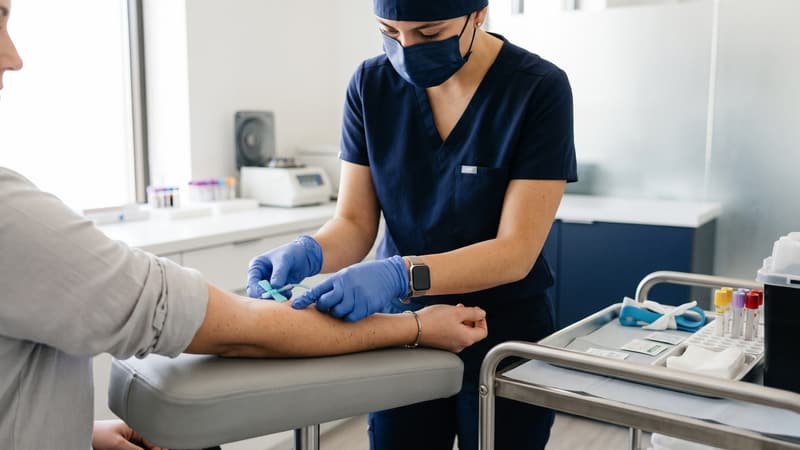
Female Hormone Panel for Adults
This female hormone panel is designed to assess endocrine function, metabolism, reproductive health and overall hormonal balance, and is applicable to adult women of different age groups and clinical profiles.
1. Objectives of the Female Hormone Panel
Assessment of ovarian and overall hormonal function (estrogen, progesterone and androgen levels).
Identification of endocrine disorders associated with age, metabolism and fertility.
Monitoring of metabolic and hormonal diseases (polycystic ovary syndrome – PCOS, thyroid disorders, menopause).
Correlation of nonspecific clinical symptoms with hormonal changes (fatigue, weight gain, menstrual changes, infertility, hirsutism).
Follow-up of women of reproductive age, menopausal women, athletes and individuals with risk factors for hormonal disorders.
2. Female Hormone Test Panel
The panel is divided into modules, allowing it to be tailored to each patient's clinical needs.
Module 1: Ovarian and Reproductive Function Assessment (Women of reproductive age)
Objective: Assess female hormone production and ovarian function.
- Estradiol (E2) (Key estrogenic hormone for the menstrual cycle, fertility and bone health.)
- Interpretation: Elevated levels may indicate hyperestrogenism, as in estrogen-producing tumors or hormone therapy use. Low levels may indicate ovarian failure, menopause or hypothalamic dysfunction.
- Progesterone (Important for regulating the menstrual cycle and maintaining pregnancy.)
- Interpretation: Low levels may suggest anovulation or luteal phase insufficiency, affecting fertility. Elevated values confirm ovulation.
- FSH (Follicle-Stimulating Hormone) (Reflects ovarian function and can help diagnose menopause and ovarian failure.)
- Interpretation: Elevated levels indicate primary ovarian failure (menopause, Turner syndrome). Low levels may suggest hypothalamic or pituitary dysfunction.
- LH (Luteinizing Hormone) (Related to ovulation and ovarian function; assesses possible reproductive disorders.)
- Interpretation: Increased levels with normal FSH may suggest PCOS, while elevated LH and FSH may indicate menopause.
- Prolactin (When elevated, may cause amenorrhea, infertility and galactorrhea.)
- Interpretation: Elevated levels may indicate pituitary tumors (prolactinomas), stress or thyroid dysfunction.
- AMH (Anti-Müllerian Hormone) (Biomarker of ovarian reserve, useful for fertility assessment and diagnosis of early menopause.)
- Interpretation: Low levels indicate diminished ovarian reserve, common in women approaching menopause or with primary ovarian insufficiency.
Recommended for: All adult women, especially those with menstrual changes, infertility or symptoms of hormonal dysfunction.
Module 2: General Metabolic and Hormonal Assessment
Objective: Assess hormonal factors that affect metabolism, energy and women's health.
- Free T4 (Active thyroid hormone that regulates energy metabolism and cellular function.)
- Interpretation: Low levels indicate hypothyroidism (possibly Hashimoto's disease). Elevated levels suggest hyperthyroidism.
- TSH (Thyroid-Stimulating Hormone) (Indicator of thyroid function and basal metabolism.)
- Interpretation: Elevated values suggest primary hypothyroidism, while low values may indicate hyperthyroidism or pituitary dysfunction.
- Insulin and HOMA-IR (Insulin Resistance Index) (Important for assessing the risk of type 2 diabetes and metabolic syndrome.)
- Interpretation: Elevated levels indicate insulin resistance, predisposing to PCOS and obesity.
- Vitamin D (25-OH) and Serum Calcium (Essential for bone metabolism and hormonal balance.)
- Interpretation: Deficiencies may be associated with osteoporosis and low immunity.
- Morning Cortisol (Assesses stress response and adrenal function.)
- Interpretation: Elevated values suggest hypercortisolism (Cushing's syndrome), while low values may indicate adrenal insufficiency.
- IGF-1 (Insulin-Like Growth Factor 1) (Related to GH; affects cell growth, anabolism and aging.)
- Interpretation: Low levels may suggest GH deficiency, while high levels may indicate acromegaly.
Recommended for: Women with overweight, fatigue, insulin resistance, cognitive complaints or symptoms suggestive of metabolic dysfunction.
Module 3: Polycystic Ovary Syndrome (PCOS) and Androgen Disorders Assessment
Objective: Identify signs of hyperandrogenism and hormonal changes associated with PCOS.
- Total and Free Testosterone (Assesses androgen excess, which can cause acne, hirsutism and hair loss.)
- Interpretation: Elevated levels may suggest PCOS or androgen-producing tumors.
- DHEA-S (Dehydroepiandrosterone Sulfate) (Testosterone precursor, useful in investigating androgen disorders.)
- Interpretation: High levels may indicate adrenal dysfunction or PCOS.
- SHBG (Sex Hormone-Binding Globulin) (Reduced in PCOS, which may lead to increased free testosterone.)
- Interpretation: Low levels indicate greater androgenic activity.
- 17-OH Progesterone (Essential for differentiating PCOS from congenital adrenal hyperplasia.)
- Interpretation: Elevated levels suggest congenital adrenal hyperplasia, especially in cases of PCOS that do not respond to treatment.
Recommended for: Women with acne, menstrual irregularity, weight gain, hair loss, hirsutism or a PCOS diagnosis.
3. Clinical Application of the Female Hormone Panel
This panel should be interpreted on an individual basis, considering the following clinical profiles:
Women with menstrual changes and suspected ovarian dysfunction → Modules 1 and 3
Women over 40 or in menopause → Modules 1, 2 and 3
Women with symptoms of PCOS, acne, hirsutism or hair loss → Module 3
Women with insulin resistance, fatigue or metabolic disorders → Modules 2 and 3
4. Final Considerations and Recommendations
Frequency: The complete panel is recommended annually, with quarterly reassessments in cases of hormone replacement or active hormonal disorders.
Importance of medical follow-up: Results should be interpreted by an endocrinologist, gynecologist or experienced physician, ensuring an appropriate diagnostic and therapeutic approach.
Evidence-based: This panel follows the guidelines of the Endocrine Society, the Brazilian Society of Endocrinology and Metabolism (SBEM), the American College of Obstetricians and Gynecologists (ACOG) and the European Society of Endocrinology (ESE).
Conclusion
This Female Hormone Panel is an essential test for assessing the endocrine, metabolic and reproductive health of adult women.
It should be applied according to the clinical profile and individually adjusted to provide relevant clinical data for the prevention and treatment of hormonal conditions.
Integration between endocrinology, gynecology and laboratory medicine is essential for the best interpretation and management.
This panel is aligned with good medical practice and Evidence-Based Medicine (EBM), ensuring diagnostic accuracy and clinical support for the patient.